Electric Cycle vs Electric Scooter - Cost Comparison for Daily Commute
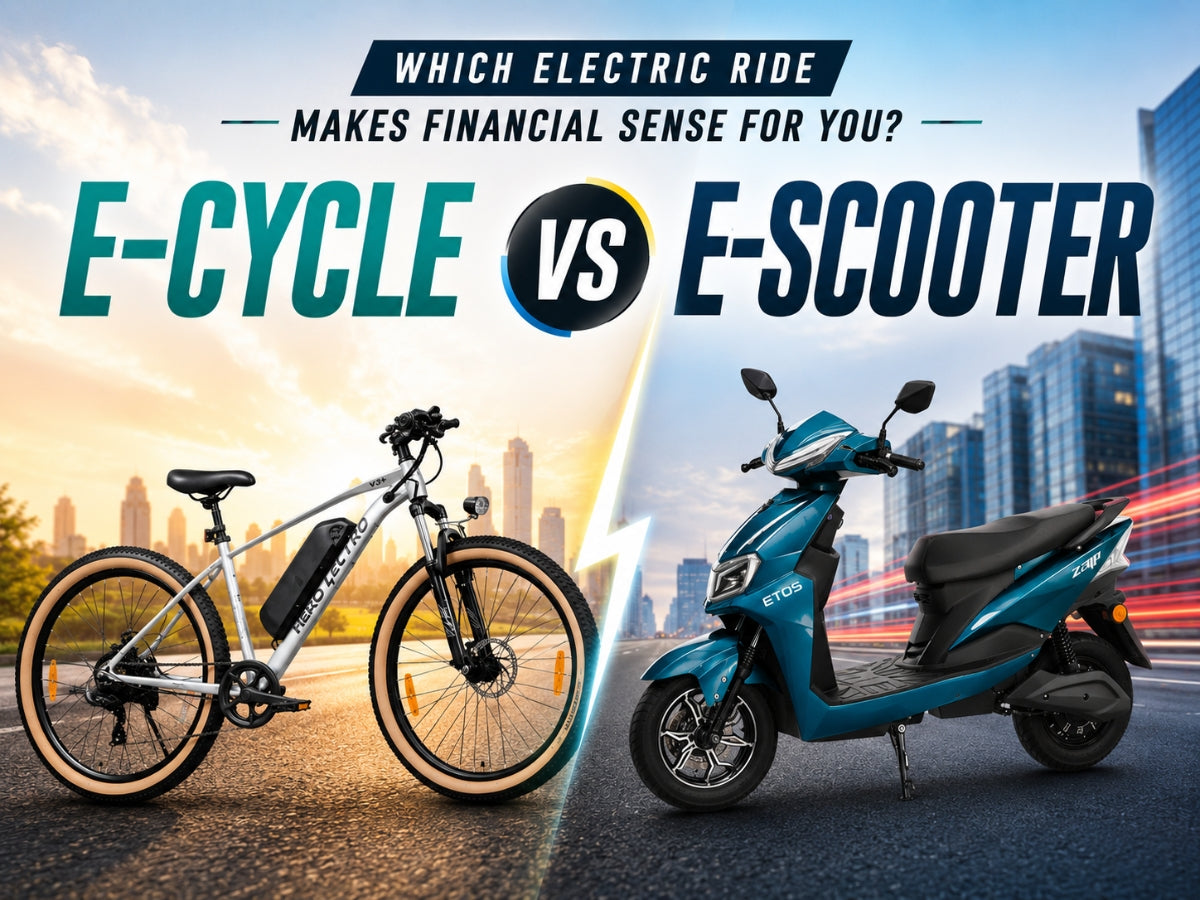

Rising fuel prices have pushed more commuters toward electric options but "going electric" isn't a single decision anymore. Do you go with an electric cycle or an electric scooter? Both promise to cut your fuel bills and daily commute stress, but they serve genuinely different needs. Here's a straight, numbers-first comparison to help you pick the one that actually makes financial sense for you.
The Core Difference
An electric cycle (e-cycle) is a pedal-assist or throttle-assist bicycle lighter, generally free from registration requirements, and built for shorter distances. Think of it as a bicycle with a boost, not a replacement for a full vehicle.
An electric scooter, on the other hand, is a full two-wheeler replacement. It's heavier, faster, and requires registration and a valid license, but in return it covers longer distances comfortably and can keep up with regular traffic speeds.
The right choice depends less on which is "better" in the abstract and more on three practical factors: your commute distance, your road conditions, and whether you regularly need to carry a passenger.
Upfront Cost Comparison
| Electric Cycle | Electric Scooter | |
|---|---|---|
| Price range | Generally lower | Generally 2–4x higher |
| Registration/RC | Not required (under 25 km/h, per motor vehicle rules) | Required |
| License needed | No | Yes |
| Insurance | Optional | Mandatory (third-party minimum) |
Key point: E-cycles have a real cost advantage upfront and it's not just because the vehicle itself is cheaper. It's because they skip registration, license, and insurance overhead entirely. When you add up the paperwork, fees, and mandatory insurance premiums that come with a scooter, the gap between the two options widens well beyond the sticker price alone.
Running Cost Comparison
Electric Cycle
- Battery capacity is smaller, which keeps the charging cost per full charge low.
- Typical range per charge sits around 25–50 km, depending on battery size and how much you rely on pedal-assist versus throttle.
- With no fuel, no engine oil, and minimal moving parts, there's very little to service regularly.
Electric Scooter
- A larger battery means a higher charging cost per cycle but it also covers a much longer range, typically 60–100+ km per charge.
- The motor and controller need periodic servicing to keep performance consistent.
- Tyres and brakes tend to wear faster, simply because scooters travel at higher speeds and carry more overall weight.
The bottom line: for a like-for-like daily distance, e-cycles cost less to run per kilometre, purely because the battery and motor are smaller and more efficient at low speeds. That said, scooters start making up ground on longer commutes, where fewer charges are needed per week relative to the distance covered.
Which Makes Sense for Your Commute?
Choose an e-cycle if:
- Your one-way commute is under 10–12 km
- You want to avoid the hassle of registration, license, and insurance
- You like having the option to pedal manually if the battery runs low
- You're commuting mostly on city roads, not highways
Choose an e-scooter if:
- Your commute regularly exceeds 15–20 km one way
- You need to carry a passenger on a regular basis
- You want higher top speeds for highway or arterial road stretches
- You're comfortable taking on the added cost of registration and insurance
Maintenance & Longevity
E-cycles generally come with simpler drivetrains and fewer electronic components, which translates directly into lower long-term maintenance costs there's simply less that can go wrong. Scooters, by contrast, carry more complex electronics, including controllers and larger battery management systems (BMS). This complexity can mean higher repair bills if something fails once you're outside the warranty window.
If low-maintenance ownership is a priority for you especially if you don't have easy access to specialized e-scooter service centers this is a point worth weighing carefully.
Break-Even Perspective
If you're replacing a daily petrol commute, both options will eventually pay for themselves through fuel savings. But the timeline to that break-even point differs. E-cycles typically reach it faster, thanks to their lower upfront cost and zero registration or insurance overhead provided, of course, that your commute distance comfortably fits within their range. For longer commutes, a scooter's higher upfront cost gets offset over time by covering more ground per charge, so the math shifts in its favor the further you travel each day.
Frequently Asked Questions
Q: Do I need a license for an electric cycle in India? No as long as the e-cycle's motor power and speed fall within the limits that classify it as a bicycle rather than a motor vehicle (typically under 25 km/h with pedal assist).
Q: How long do e-cycle batteries typically last? Most lithium-ion batteries used in e-cycles last 500–800 charge cycles before a noticeable drop in capacity roughly 2–3 years of daily use before replacement is worth considering.
Q: Can an e-cycle handle Indian traffic and road conditions? Yes, for city commuting. That said, if your route regularly includes potholes or unpaved stretches, it's worth checking the tyre type and suspension setup before you buy.
Find Your Fit
Explore our range of electric cycles at JBC Electric "https://justbuycycles.com/pages/justbuyelectric" built for the Indian daily commute, with local service support across our showroom network.